







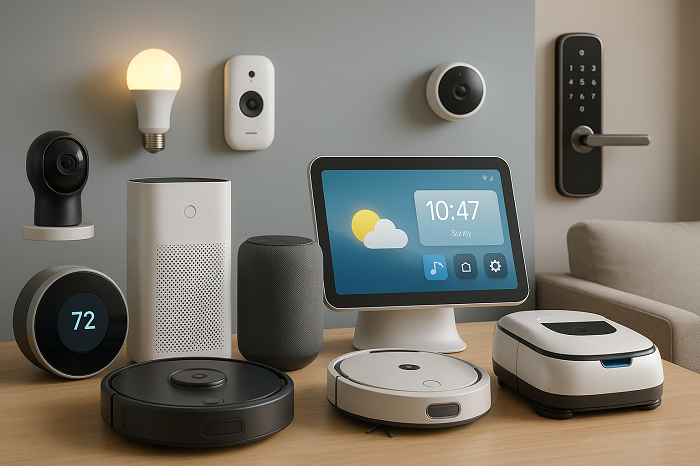
The concept of a smart home has evolved dramatically over the past decade, moving from futuristic speculation to a daily reality for millions of households. By 2025, the integration of artificial intelligence, automation, and Internet of Things (IoT) technology has transformed the way we live, making homes not just connected but truly intelligent. Smart home gadgets are no longer luxury items; they have become essential tools for convenience, energy efficiency, and security. From AI-powered assistants to connected appliances, these innovations are designed to save time, enhance comfort, and make daily living seamless. In this article, we explore the top 10 smart home gadgets in 2025 that are reshaping modern living, offering insights into their features, benefits, and why they are must-haves for every home.
1. Smart Home Assistants Powered by AI
Smart assistants have come a long way since their early versions. In 2025, devices such as Amazon Alexa, Google Nest Hub, and Apple HomePod are powered by advanced generative AI, making them more conversational, intuitive, and capable of understanding complex requests. These assistants now serve as the central hub of smart homes, managing connected devices, controlling appliances, offering personalized recommendations, and even predicting user needs based on daily routines. With multi-language support, improved voice recognition, and tighter integration with household systems, smart assistants have become indispensable companions for managing modern living.
2. Smart Security Cameras and Doorbells
Home security continues to be a top priority, and in 2025, smart cameras and video doorbells have set new standards. Devices like Ring, Arlo, and Google Nest cameras now feature AI-driven motion detection, facial recognition, and real-time alerts that distinguish between family members, visitors, and potential threats. Doorbell cameras come with two-way audio, night vision, and integration with smart locks, allowing homeowners to monitor and control access remotely. With cloud storage and enhanced data encryption, these security systems ensure peace of mind while maintaining privacy and reliability.
3. Intelligent Smart Locks
Gone are the days of worrying about misplaced keys. Smart locks in 2025 are designed to provide seamless access control with biometric authentication, smartphone apps, and voice commands. Many models now feature geofencing, automatically locking or unlocking doors when residents approach or leave the home. These locks integrate effortlessly with other smart security systems, enabling remote monitoring and temporary access codes for guests or service providers. With enhanced encryption protocols, smart locks offer a balance of convenience and security, making them essential gadgets for connected homes.
4. AI-Powered Smart Thermostats
Energy efficiency is one of the most important benefits of smart home technology, and thermostats have become central to this transformation. Leading models like Nest Learning Thermostat and Ecobee in 2025 use AI to learn household patterns, adjusting heating and cooling automatically to reduce energy waste. These devices monitor occupancy, weather patterns, and energy tariffs to optimize climate control while keeping bills lower. With integration into smart grids and renewable energy systems, modern thermostats not only enhance comfort but also contribute to sustainable living.
5. Smart Lighting Systems
Lighting has become more than just illumination; it is now about ambiance, mood, and energy savings. Smart lighting systems in 2025 allow users to control brightness, color, and schedules via voice commands, mobile apps, or automation routines. Systems like Philips Hue and Nanoleaf offer adaptive lighting that adjusts based on natural daylight, activities, or even entertainment such as movies and music. Beyond convenience, these systems are energy efficient and can be linked to security features, creating a safer and more enjoyable living environment.
6. Connected Kitchen Appliances
The kitchen is at the heart of the smart home revolution. In 2025, appliances like smart refrigerators, ovens, and coffee machines are designed to save time and reduce effort. Smart fridges track inventory, suggest recipes, and even order groceries automatically. Ovens can be controlled remotely, preheated by voice command, and adjust cooking times based on the dish being prepared. Coffee machines sync with morning routines, preparing beverages precisely when needed. These innovations not only simplify cooking but also help reduce food waste and improve household efficiency.
7. Robotic Vacuum and Cleaning Devices
Robotic vacuum cleaners and mops have become household staples, but in 2025, they are more advanced than ever. Devices like iRobot Roomba, Roborock, and Dyson robots feature AI-powered mapping, obstacle detection, and self-cleaning functions. They adapt to various floor types, create efficient cleaning routes, and can be controlled remotely via apps. Some models even integrate with voice assistants and automatically return to their charging docks or empty themselves into dustbins. By taking over daily chores, these gadgets free up valuable time while keeping homes spotless.
8. Smart Air Purifiers and Climate Devices
As air quality becomes a growing concern worldwide, smart air purifiers have gained immense popularity. The 2025 versions feature AI-driven monitoring systems that track pollutants, allergens, humidity, and temperature in real time. Brands like Dyson, Honeywell, and Xiaomi have introduced purifiers with HEPA filtration, UV sterilization, and integration into smart ecosystems. These devices send alerts when air quality declines, adjust automatically, and can be controlled via apps or voice assistants. Combined with humidifiers and dehumidifiers, they ensure healthier indoor environments.
9. Smart Entertainment Systems
Entertainment has also seen a massive shift with the rise of smart home technology. In 2025, smart TVs, projectors, and speakers are deeply integrated into home ecosystems. Devices like Samsung Smart TVs, LG OLED panels, and Sonos speakers support AI-driven content recommendations, immersive sound, and seamless control through voice or gesture. Smart projectors transform any room into a mini-theater, while connected audio systems deliver surround sound experiences. With gaming consoles, streaming platforms, and virtual reality devices synced together, smart entertainment systems redefine leisure at home.
10. Advanced Smart Home Hubs
At the core of every smart home is a hub that connects and coordinates multiple devices. In 2025, advanced hubs such as Samsung SmartThings and Home Assistant have evolved to become more intuitive and interoperable. They support cross-platform connectivity, ensuring compatibility between different brands and devices. These hubs provide centralized dashboards, energy monitoring, and automation controls, allowing users to manage their homes effortlessly. By acting as the brain of the smart home, hubs enhance convenience, efficiency, and customization.
Conclusion
Smart home gadgets in 2025 are no longer futuristic luxuries but practical necessities that improve quality of life. From AI-powered assistants and thermostats to connected appliances and entertainment systems, these innovations deliver convenience, security, and sustainability. As technology continues to advance, the smart home ecosystem will only grow stronger, offering even more opportunities to simplify daily living. Whether you are upgrading your home for comfort, safety, or energy efficiency, investing in these top smart home gadgets will ensure your home is future-ready.
Frequently Asked Questions
Q1. What is the most popular smart home gadget in 2025?
Answer. Smart assistants remain the most widely used gadgets due to their central role in managing other connected devices and providing personalized support.
Q2. Are smart home gadgets worth the investment?
Answer. Yes, they save time, improve security, reduce energy costs, and enhance overall comfort, making them a long-term value for homeowners.
Q3. Do smart home devices work together?
Answer. Most modern gadgets are designed with interoperability in mind, especially when connected through a central hub or ecosystem.
Q4. Are smart home gadgets secure?
Answer. Manufacturers in 2025 have focused heavily on encryption and data protection, but users should always update firmware and use secure networks.
Q5. Can smart home technology reduce energy bills?
Answer. Absolutely. Devices like smart thermostats, lighting systems, and appliances are built to optimize energy usage, leading to significant cost savings.