







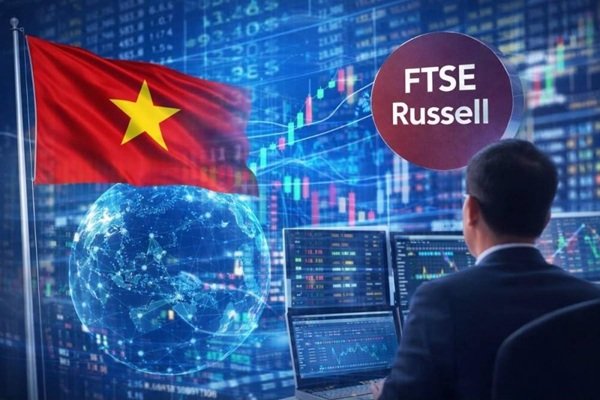
New Delhi, India, 22 July: Vietnam’s recent upgrade to Secondary Emerging Market status, combined with one of the strongest economic growth rates in the region and far-reaching institutional reforms, is creating significant opportunities for international investors in the Vietnamese stock market.
A Strong Reform Foundation and Long-Term Vision for Global Integration
After nearly four decades of the Đổi Mới (Renovation) reforms, Vietnam is entering a pivotal stage of development with the ambition of becoming a high-income economy by 2045. This new phase focuses on transforming the country’s growth model toward higher productivity, greater efficiency, and innovation, while deepening integration into the global economy.
Between 2024 and 2026, the Government introduced a series of strategic resolutions centered on key pillars, including science and technology, digital transformation, private sector development, energy security, and human capital enhancement. These reforms not only provide a long-term development framework but also directly improve the investment environment, creating favorable conditions for international capital inflows.
As global supply chains continue to diversify and restructure, Vietnam has emerged as an increasingly attractive destination due to its competitive cost structure, strategic geographic location, and stable political environment. These advantages are highly valued by international investors seeking sustainable growth opportunities in emerging markets.
Robust Economic Growth Underpins Investment Opportunities
In 2025, Vietnam recorded an estimated GDP growth rate of 8.02%, placing it among the fastest-growing economies in both Asia and the world. GDP per capita reached approximately USD 5,026, officially elevating Vietnam into the upper-middle-income country category.
Economic growth has been supported by balanced expansion across the industrial, agricultural, and service sectors, reflecting a resilient and increasingly diversified economy.
International trade remains a key growth driver, with total import-export turnover exceeding USD 930 billion and a trade surplus of more than USD 20 billion. Vietnam continues to strengthen its position in global supply chains, particularly in manufacturing and export-oriented industries.
Foreign direct investment (FDI) has also maintained strong momentum, placing Vietnam among the 15 largest FDI recipients among developing economies worldwide. More importantly, FDI is increasingly concentrated in high-value-added sectors such as advanced technology, smart manufacturing, and the digital economy, thereby enhancing the quality of economic growth while creating broader opportunities for financial investors.
Capital Market Reforms Enhance Market Accessibility
One of the most notable developments has been Vietnam’s determination to simplify administrative procedures and reduce barriers to market entry.
The introduction of the non-prefunding mechanism for foreign investors, together with the relaxation of foreign ownership restrictions and mandatory bilingual information disclosure requirements, has significantly improved market accessibility. These reforms bring Vietnam’s capital market closer to international emerging-market standards while creating a more transparent and investor-friendly environment.
The launch of the KRX trading system in May 2025 marked another important milestone in the modernization of Vietnam’s securities market. The new platform lays the technological foundation for advanced trading products, including intraday trading and regulated short selling in the future.
At the same time, Vietnam is developing a Central Counterparty Clearing (CCP) mechanism, which is expected to strengthen market safety, improve settlement efficiency, and help satisfy the requirements for future market upgrades.
A Strategic Window of Opportunity for Global Investors
Vietnam has intensified its international investment promotion efforts while maintaining regular policy dialogues with leading global financial institutions. Investment conferences held in major financial centers such as New York, London, Hong Kong, and Singapore demonstrate the country’s proactive approach to enhancing market visibility and attracting long-term institutional investors.
Looking ahead, Vietnam aims to achieve MSCI Emerging Market status before progressing toward Advanced Emerging Market classification by 2030. This roadmap will be supported by continued legal reforms, further liberalization of foreign ownership limits, the introduction of new financial products, and higher corporate governance standards. If implemented as planned, these initiatives could significantly expand both the scale and quality of Vietnam’s capital market.
Vietnam: An Emerging Strategic Destination for Global Capital
As global investment capital continues to be reallocated, Vietnam stands out as one of the few markets combining high economic growth, macroeconomic stability, ambitious structural reforms, and substantial long-term development potential.
Having recently achieved market reclassification while remaining in the early stages of its growth cycle, Vietnam’s stock market represents one of the most compelling investment opportunities in Asia.
Supported by solid economic fundamentals and a clearly defined reform agenda, Vietnam is steadily establishing itself not merely as an emerging market, but as a strategic destination for global capital over the coming decade.
For international investors, the question is no longer whether to invest in Vietnam—it is how early they should establish their presence.